

Ink Selection for Medical Devices
Comments Off on Ink Selection for Medical DevicesSelecting the right ink is an important part of producing clear, durable markings on medical devices. Printed logos, product information, identification codes, measurement scales, and other graphics must remain legible throughout the expected use of the device. The ink must also work properly with the material and surface being printed.
For manufacturers using medical pad printing, ink selection should account for the device substrate, cleaning procedures, chemical exposure, and production requirements. Pad Printing Technology provides medical printing services for components and devices made from a range of materials, helping customers identify a printing process suited to their application.

Consider the Medical Device Material
The device material is one of the first factors to consider. Plastics, metals, rubber, and other engineered materials can have different surface characteristics that affect ink adhesion and print quality.
Pad Printing Technology works with a variety of substrates and can evaluate the material and surface condition as part of the printing process. Providing details about the device material, surface texture, and finish helps determine the appropriate ink and production approach for the project.
Evaluate Ink Adhesion and Durability
Medical-device markings may face frequent handling, abrasion, cleaning, disinfecting, and chemical exposure. The selected ink should maintain adhesion and legibility under the conditions expected during use.
For medical device pad printing, testing can help determine how the printed image performs on the actual component. Adhesion and durability evaluations provide useful information before production begins and can help identify potential issues with the selected ink or substrate.
Match the Ink to the Device’s Intended Use
The required ink performance depends on what the printed marking needs to accomplish. A logo may have different requirements from a measurement scale, identification code, instruction, or warning symbol.
Pad Printing Technology can print detailed graphics and product information on three-dimensional components. Sharing the purpose of the marking and the expected conditions of use helps the printing team select an appropriate process for the application.
Consider Sterilization, Cleaning, and Chemical Exposure
Medical devices may undergo cleaning, disinfection, or sterilization during manufacturing or use. These conditions should be considered during ink selection because heat, solvents, disinfectants, and repeated exposure can affect printed markings.
Discussing the device’s cleaning and processing requirements with your printing provider allows testing to reflect actual operating conditions. This can include exposure testing and other evaluations based on the requirements of the finished component.
Ink Color, Contrast, and Legibility
Ink selection also affects how easily a marking can be read. The ink color should provide suitable contrast with the device surface, particularly for small text, fine graphics, scales, and identification markings.
Pad Printing Technology supports single- and multi-color printing applications, giving manufacturers options for product graphics and functional markings. The substrate color, artwork, image size, and required detail should all be considered before production.
Regulatory and Quality Considerations
Ink selection should also fit the quality requirements and intended use of the medical device. Documentation, testing, and material compatibility can be important parts of the production process.
Pad Printing Technology is ISO 9001:2015 certified and provides printing services for medical applications and has a Class 8 Cleanroom available for printing on medical devices. Working with an experienced provider can help you address printing requirements early and establish an appropriate process for your components.
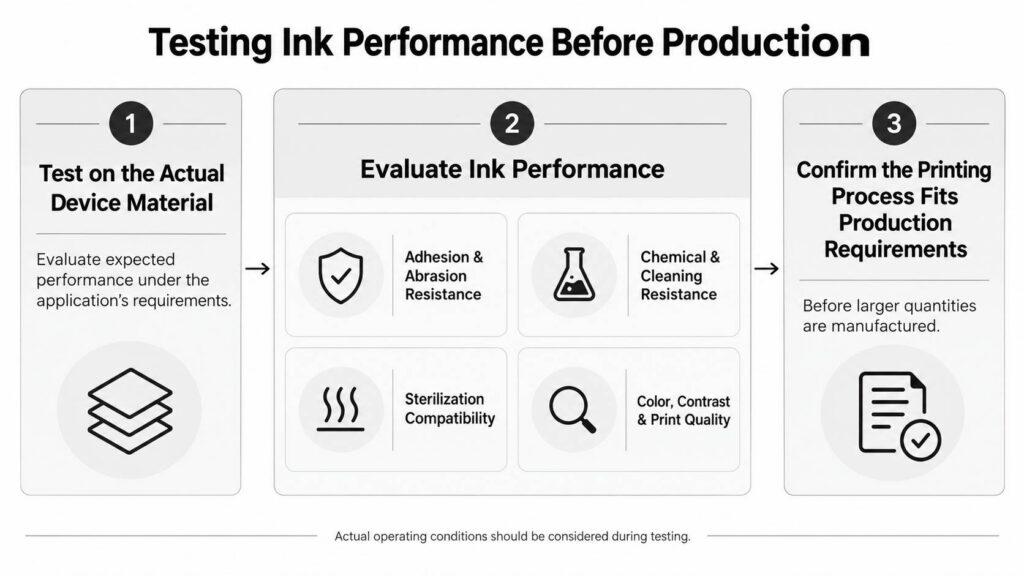
Testing Ink Performance Before Production
Testing the selected ink on the actual device material provides practical information about expected performance. Depending on the application, evaluations may include:
- Adhesion and abrasion resistance
- Chemical and cleaning resistance
- Sterilization compatibility
- Color, contrast, and print quality
These evaluations can help confirm that the selected printing process fits the production requirements before larger quantities are manufactured.
Working With a Medical Pad Printing Specialist
Ink is one part of a larger printing process. The substrate, artwork, pad, equipment, and application method all affect the final result. Pad Printing Technology can work with customers on medical printing projects ranging from prototypes to production quantities.
Providing material specifications, surface details, artwork, cleaning requirements, and expected production volumes gives the printing team the information needed to assess your project. This direct approach can help identify suitable options for medical pad printing and medical device pad printing.
Selecting Ink for Reliable Medical Device Markings
A suitable ink should provide the adhesion, durability, appearance, and chemical resistance required by the medical device application. Testing the ink on the intended substrate and considering the device’s actual operating conditions can help support consistent results.
If you need printed markings for medical components or devices, Pad Printing Technology can help evaluate your application and determine the appropriate printing approach. Contact the team to discuss your medical pad printing requirements.
